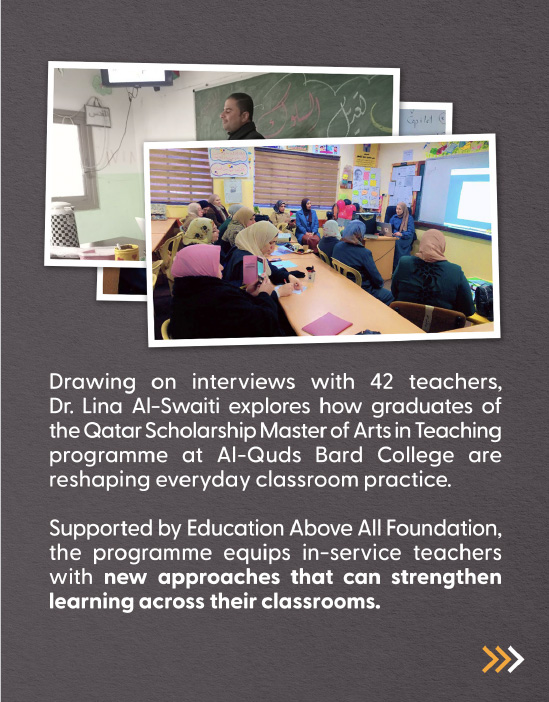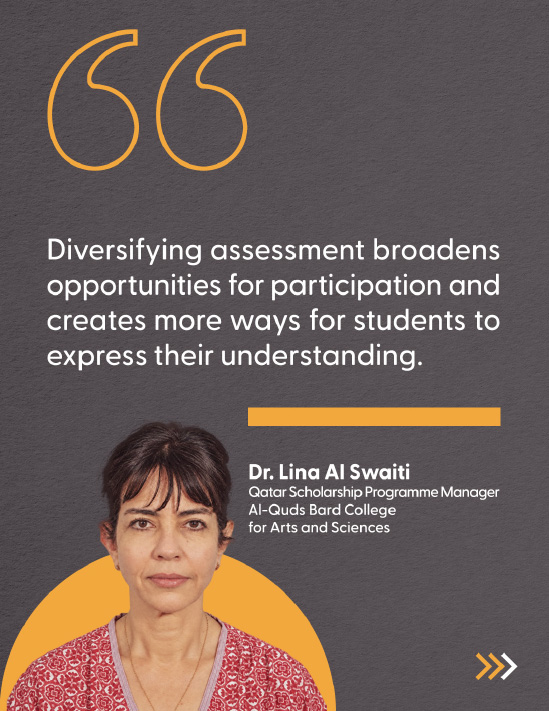

Al-Quds Bard College for Arts and Sciences continues to highlight the impact of its Master of Arts in Teaching (MAT) program, supported by the Education Above All (EAA) Foundation, through a new article exploring how Palestinian teachers are transforming classroom assessment practices and creating more inclusive learning environments.
The article, titled “Diversifying Assessment: Classroom Practices Reshaping Learning in Palestinian Schools,” is authored by Dr. Lina Al-Swaiti, Qatar Scholarship Program Manager at Al-Quds Bard College and Al-Quds University. It is the second in a series examining the transformations in teaching practices among graduates of the MAT program and how these changes are reflected in their everyday classroom experiences.
Drawing on a qualitative analysis of interviews with 42 teachers, the article reveals significant shifts in how educators approach student assessment. The findings show that 74% of participating teachers use a variety of assessment tools, while 69% have adopted multiple assessment formats. Furthermore, 64% reported that assessment has become a means of understanding students’ thinking and supporting their learning throughout the lesson, rather than simply measuring their final performance.
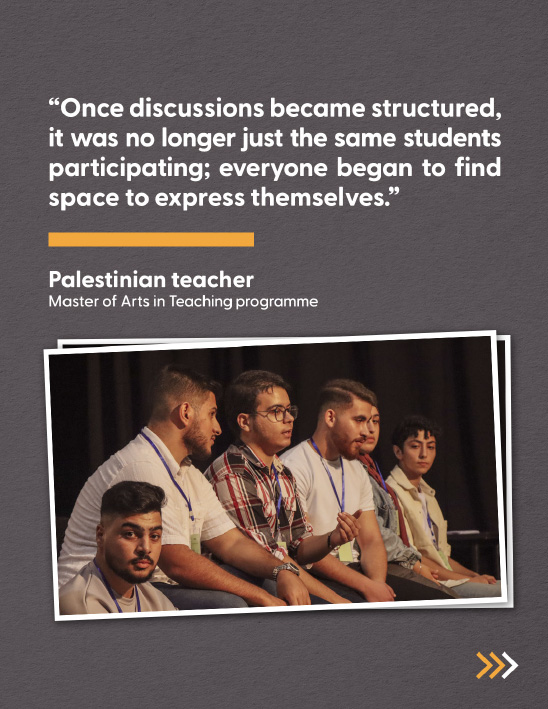
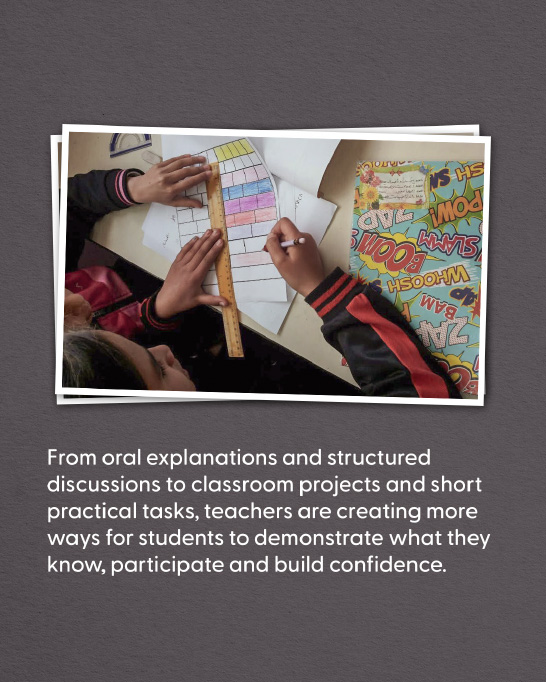
The article highlights four key assessment practices that have reshaped classroom experiences: oral assessment, structured classroom discussions, classroom projects, and brief applied tasks. Through these approaches, teachers are providing students with diverse opportunities to demonstrate their understanding, express their ideas, and actively participate in the learning process.
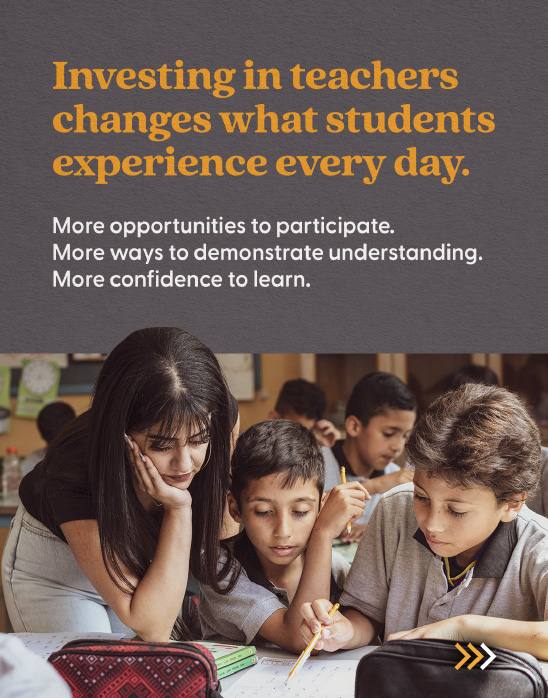
These practices have contributed to broader student participation, deeper understanding, stronger critical-thinking skills, and increased self-confidence. They have also enabled teachers to identify learning difficulties more effectively, provide immediate feedback, and adapt their teaching to students’ needs.
The findings are particularly significant in the Palestinian educational context, where classroom resources and learning conditions vary. By diversifying assessment methods, teachers can create more flexible and inclusive learning environments that recognize differences in students’ abilities and ways of learning, while promoting educational justice and equal opportunities.
Through the MAT program, supported by the Education Above All Foundation, Al-Quds Bard College continues to contribute to the professional development of Palestinian teachers and to strengthening educational practices that place students, their experiences, and their learning at the center of the classroom.
Read the full article in Arabic: Diversifying Assessment: Classroom Practices Reshaping Learning in Palestinian Schools.
Mailing Address
Main Campus, Abu Dis, Jerusalem, Palestine.
Contact us via:
Phone: +970 (2) 279 4950 (6192)
Email: ba-admission@bard.alquds.edu